

Commentary and Analysis by M. Nuri Shakoor, SRMP
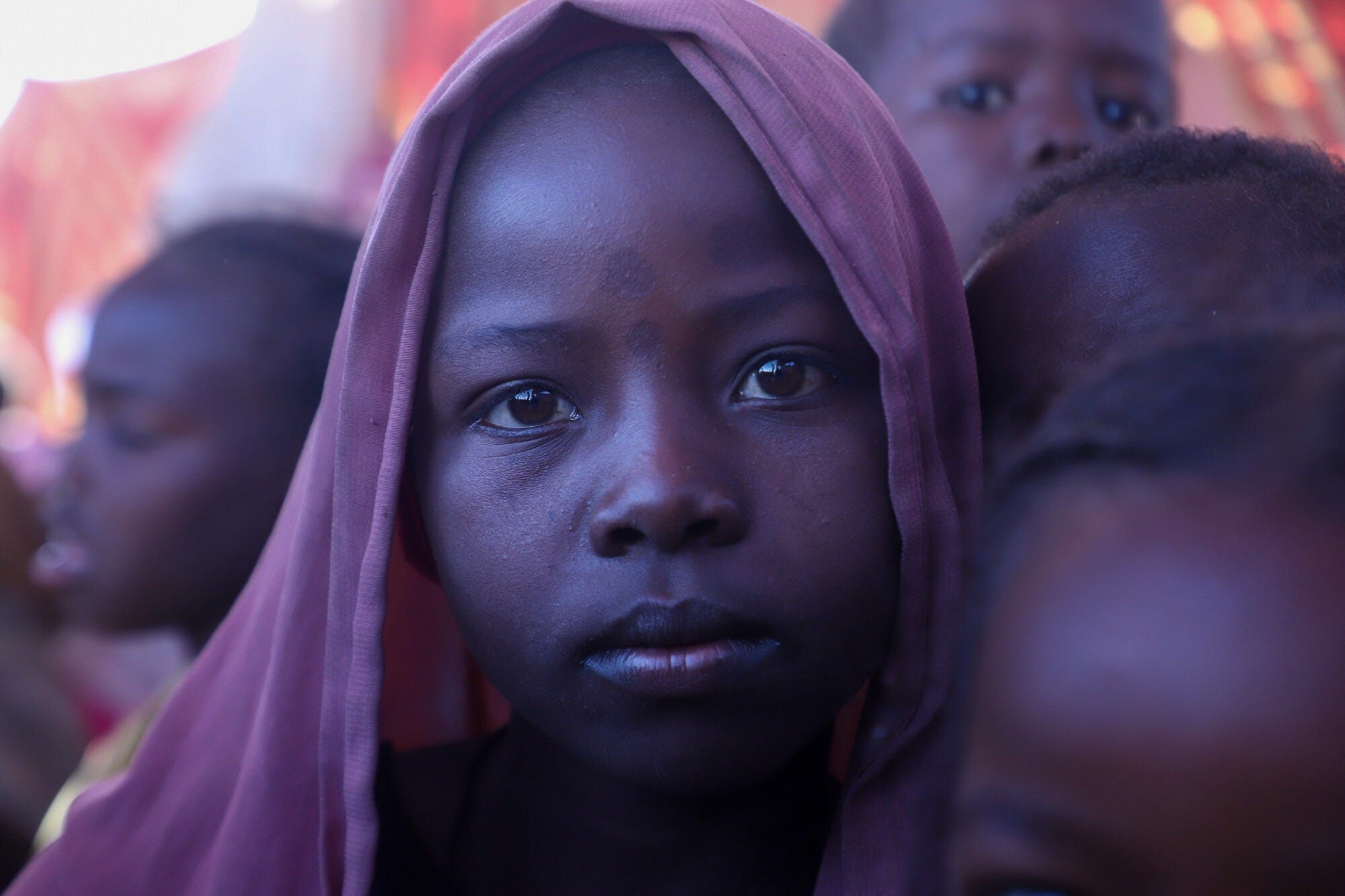
The first thing many children drew when they reached Tawila was not a house, or a football, or a tree.
It was a gun.
On the floor of a canvas tent at the edge of the desert, boys and girls who had just escaped the fall of El Fasher sketched military vehicles, bodies, and blood. Some refused to speak at all. Others woke up screaming from nightmares. A few had no parents with them; the adults they once relied on were missing, presumed detained, or killed.
These drawings are not art assignments. They are evidence. They tell us what it really means when a city is shelled off the map and its survivors walk for days to a patch of sand called Tawila. According to the Norwegian Refugee Council, at least 400 children have arrived there without parents since the attacks on El Fasher intensified in late October, and more than 15,000 people have been newly registered in Tawila in just one month (Norwegian Refugee Council, 2025). (NRC)
Zoom out one more level. The International Organization for Migration’s Displacement Tracking Matrix estimates that 100,537 people have been displaced from El Fasher town and nearby villages since 26 October, spread across 23 localities in nine states, in a situation it calls “tense and highly fluid” (International Organization for Migration, 2025).
Those are the numbers. The children’s drawings are what the numbers feel like.
A classroom built from canvas and shock
In one of the learning tents, a former teacher from El Fasher named Nidaa now spends her days with the children who fled the same city she did. She is displaced and frightened like them, but inside the tent she becomes something else; a human buffer between their memories and the next incoming crisis.
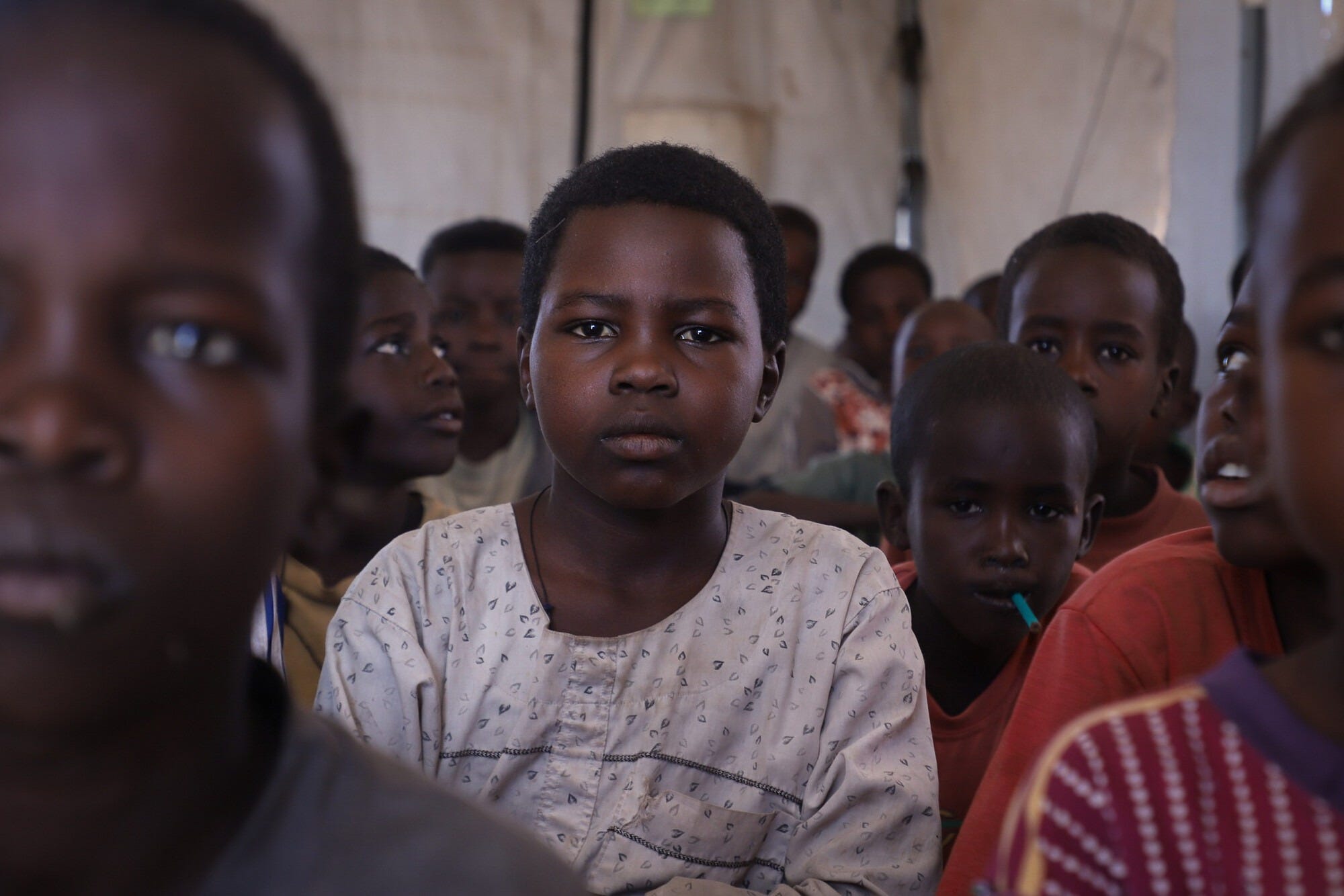
“When we first started our classes, some of the children could not speak at all,” she recalls. “Others were waking up with nightmares. Many witnessed extreme violence before escaping and are showing signs of acute trauma” (Norwegian Refugee Council, 2025). (NRC)
The tent is part of NRC’s Better Learning Programme, a low-cost but carefully designed package of psychosocial support integrated into emergency education. Children draw, play games, sing and learn to breathe slowly when fear spikes. To an outsider this might look like ordinary schoolyard time. To a child who watched their home leveled by shelling, it is a rehearsal for feeling safe again.
Another aid worker, Jamia, describes how children slowly begin to talk as they draw. A boy outlines a house, then quietly adds that it was hit by a shell while his family hid inside. A girl draws the road out of El Fasher, then dots it with bodies. Some children admit they walked at night to avoid armed groups, hugging the edges of dry riverbeds.
This is not therapy in the clinical sense. There are no couches or private offices. There is a tarpaulin roof, crowded benches, and a handful of people like Nidaa and Jamia who understand that trauma has its own language and that children often speak it first with crayons, not words.
The new childhood: queues, cold nights, and adult burdens
If the violence in El Fasher was the first trauma, daily life in Tawila risks becoming the second.
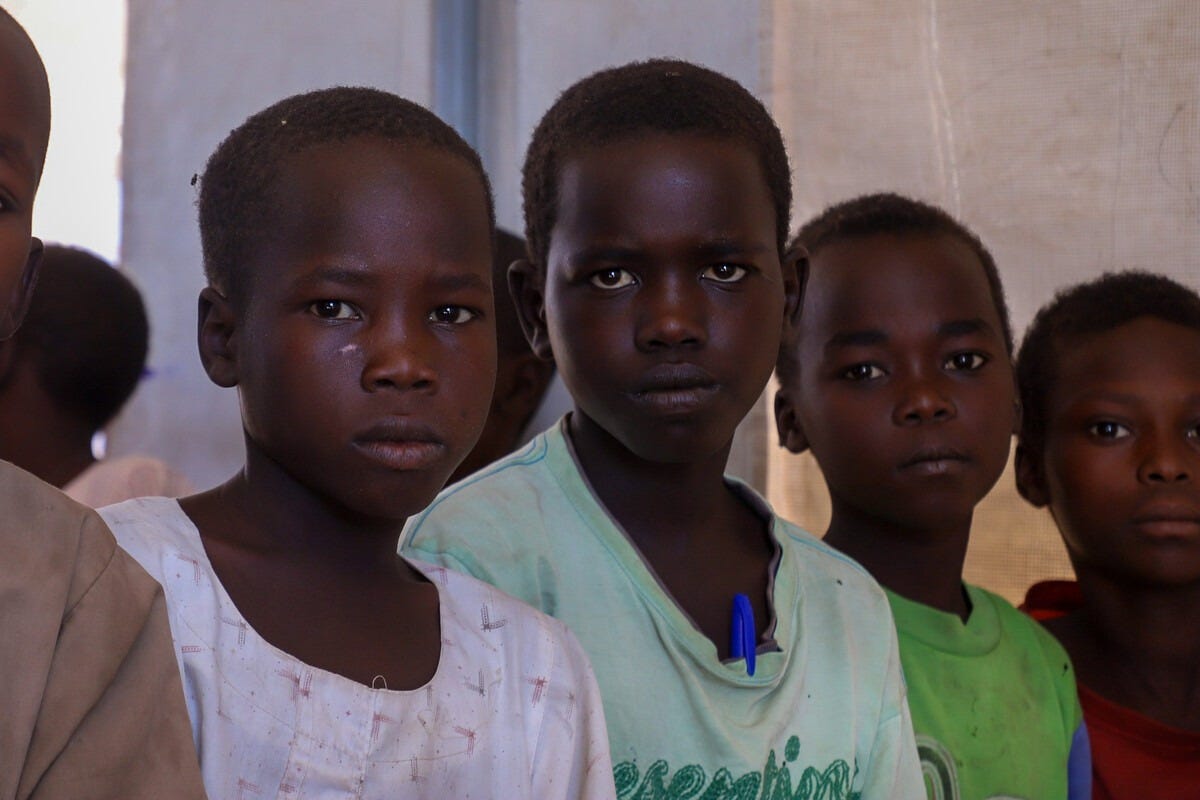
Families arrive with almost nothing. Many children sleep outside or under makeshift shelters, exposed to cold desert nights without blankets or mats. They talk about the wind, the sand that gets into everything, and the feeling of waking up shivering next to siblings they are now responsible for.
Food is a daily negotiation. Communal kitchens and charity groups provide meals when they can, but distributions are irregular. Children stand in long queues with battered plates because if they lose their place, an entire family may go to bed hungry. Some skip classes in the learning tent because staying in line for food is the only rational choice.
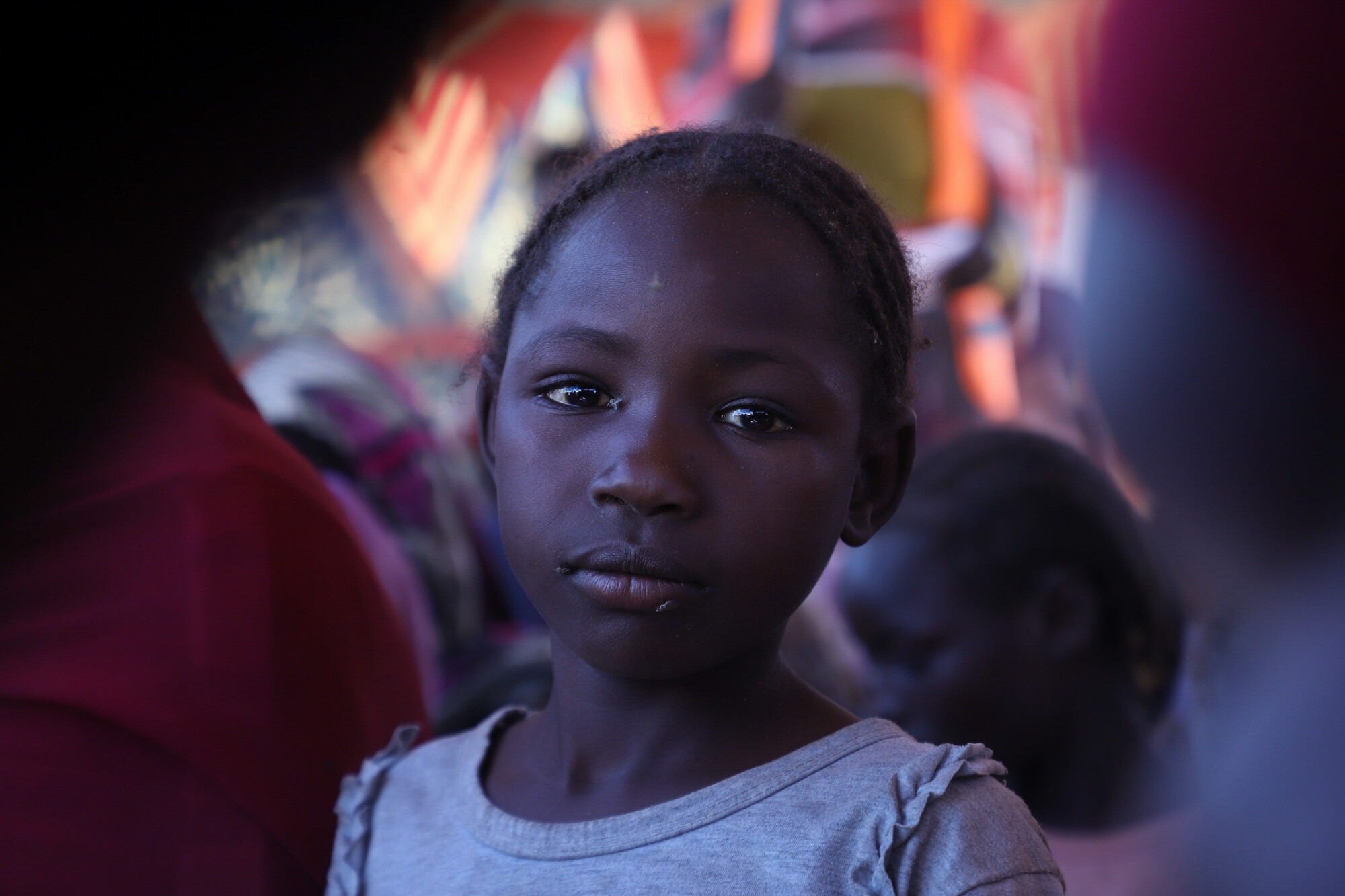
Illness is common. When children fall sick, they join new queues at overwhelmed health centers run by humanitarian organizations, waiting hours just to see a nurse. Clean water is limited.
And then there is the invisible weight. Fifteen year olds arriving as de facto heads of household. Ten year olds shepherding younger siblings through the chaos of registration and distribution. Grandmothers suddenly responsible for six or seven children after their own sons and daughters vanish during the flight from El Fasher.
In wealthier countries we often talk about “lost childhoods” as a metaphor. In Tawila it is a logistical fact. Growing up here means learning to read the mood of armed men, the length of a food line, the speed of changing weather.
What a shift in a child’s drawing really means
After several weeks of consistent activities, the team in Tawila repeated their drawing exercise. This time, many of the images were different. Weapons and burning houses began to give way to flowers, volleyball courts, and scenes of friends playing. Children who had refused to speak started to joke and engage with classmates. Reports of nightmares dropped.
The change is not magic and it is not complete. These children are still living in displacement, still sleeping in the cold, still searching for news of missing relatives. But their drawings reveal a subtle, crucial shift; trauma is no longer the only story their minds can tell. There is space again for imagination, for a future that contains something other than survival.
For donors and policymakers, this is an important signal. In a crisis as vast and politically tangled as Sudan’s, there is a temptation to focus only on food, water, and security arrangements. Those are vital. Yet the evidence emerging from Tawila suggests that psychosocial support and emergency education are not “soft” add-ons. They are part of the core infrastructure that keeps a generation from collapsing under the weight of what it has seen.
Sudan’s children, buried under competing headlines
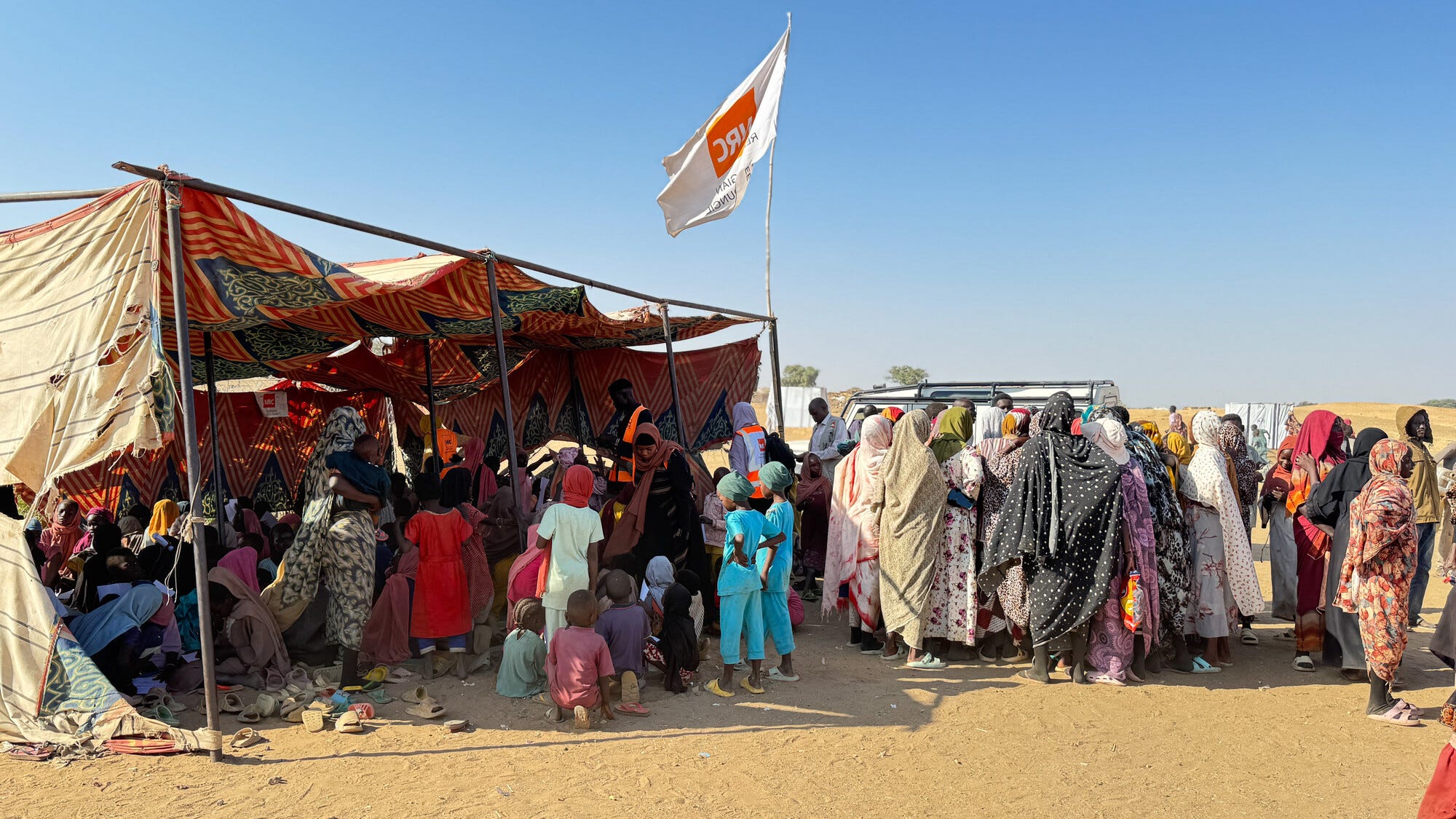
There is another uncomfortable truth that Nidaa and Jamia’s testimonies reveal. This crisis is not at the top of global news feeds.
For months, Sudan’s war has been competing for attention with conflicts that are geopolitically closer to donor capitals and more heavily covered by major media. Sudanese activists and humanitarian agencies have been warning that Darfur is at risk of becoming a textbook case of “atrocity in slow motion” that the world sees, then scrolls past.
At the same time, aid budgets are under pressure. Domestic politics in donor countries incentivize short-term, visible wins rather than long, complex protection crises in places most voters cannot find on a map. Even where there is genuine concern, fatigue sets in; another flash appeal, another cluster meeting, another grim upward revision of displacement figures.
The danger is that we begin to treat numbers like 100,537 displaced people from a single city as background noise rather than a political emergency (International Organization for Migration, 2025).
But ask yourself this: if four hundred children arrived alone in any European capital, carrying stories of massacres and days of walking through the night, how many days would it take before emergency parliamentary sessions were called, before special envoys were appointed, before headlines filled front pages for weeks?
The children in Tawila are not less worthy of protection because they are further away. They are simply easier to ignore.
What it would mean not to fail them
The NRC press release ends with a stark line. Children who arrived “traumatised, unprotected and without shelter are at extreme risk. They have already escaped mass atrocities and we cannot fail them now” (Norwegian Refugee Council, 2025). (NRC)
So what does “not failing them” look like in practice? For donors, governments, and ordinary readers, it is more concrete than it might seem.
First, fund the work that is already protecting children’s minds.
Programmes like the Better Learning Programme cost a fraction of what it takes to run large-scale military operations or diplomatic missions, yet they directly change how children process trauma. Scaling them up would allow every displaced child in Tawila to access a safe space, not just those who manage to squeeze into the two existing tents.
Second, match psychosocial support with material security.
No amount of drawing or singing can compensate for sleeping without a blanket or missing meals. Funding for shelter materials, warm clothing, food assistance, clean water, and health services is not separate from mental health support; it is the foundation that makes that support credible. A child who is warm and fed is more able to learn, to play, and to recover.
Third, invest in protection and family tracing.
The 400 children who arrived without parents are at particular risk of exploitation, abuse, and long-term psychological harm. Supporting case management, community-based foster arrangements, and efforts to trace and reunify families should be a top priority. These are not abstract “child protection activities”; they are the difference between a child growing up in a caring environment or being left to navigate the edges of a camp alone.
Fourth, keep Sudan on the agenda.
Diplomatic pressure to protect civilians, secure humanitarian access, and push for ceasefires must not be episodic. It needs sustained political attention, informed by the kind of granular data that IOM’s DTM and field-based NGOs are already collecting (International Organization for Migration, 2025; Norwegian Refugee Council, 2025).
For ordinary readers, the call is more personal: do not let this be another story that disappears into the scroll. Share it. Support organizations working on the ground. Ask your elected representatives what they are doing about Sudan.
Ending where the children begin
Somewhere in Tawila, a child is drawing right now. Maybe they are sketching the night sky over the desert, or the inside of the learning tent, or a volleyball court that exists only in their imagination. Maybe they still draw a gun.
Our choice, watching from a distance, is whether that paper is the only place their story changes.
If we allow the siege of El Fasher and the displacement to Tawila to become just another forgotten episode in a long war, then those early drawings of bodies and bullets will not be a phase. They will be prophecy.
If instead we decide that these children matter enough to fund their recovery, protect their rights, and keep their crisis visible, then the flowers and playgrounds appearing in their pictures are not just therapeutic exercises. They are early drafts of a different future.
The children of Tawila have already walked out of one catastrophe. The next step belongs to us.
References
International Organization for Migration. (2025, November 17). DTM Sudan Flash Alert: Al Fasher (Al Fasher town), North Darfur (Update 111). https://mailchi.mp/iom/dtm-sudan-flash-alert-al-fasher-al-fasher-town-north-darfur-update-111
Norwegian Refugee Council. (2025, November 27). Sudan: One month after the attacks on Al Fasher, children arrive in Tawila without parents and traumatised. https://www.nrc.no/news/2025/november/sudan-one-month-after-the-attacks-on-al-fasher-children-arrive-in-tawila-without-parents-and-traumatised