


There is a tendency to describe Mauritania’s anti-slavery problem as a matter of implementation lag. The country abolished slavery in 1981, criminalized it in 2007, passed a landmark anti-slavery law in 2015, and followed it with an anti-trafficking statute in 2020. It established specialized courts. It created a national coordinating body. It produced a National Action Plan. By the metrics that international institutions typically track, Mauritania has been performing. The U.S. State Department’s 2025 Trafficking in Persons report retained it at Tier 2, a designation that signals imperfect but meaningful effort.
That framing suggests an unfinished reform project. A country still climbing toward accountability, slowed by the usual obstacles: limited resources, institutional inexperience, the stubborn weight of culture and tradition. That is the polite explanation. But fewer than ten people have ever been imprisoned for hereditary slavery in Mauritania’s entire history [1]. An estimated 149,000 individuals remain in conditions of slavery as of 2025 [8]. The gap between those two numbers is not an implementation deficit. It is a verdict.
What is happening in Mauritania is not a slow reform stalled by capacity constraints. What looks like reform from outside is functioning as delay from within. It is a functioning system doing exactly what it was designed to do: absorb external pressure by producing legal architecture while ensuring that architecture never reaches the people it was written to protect.
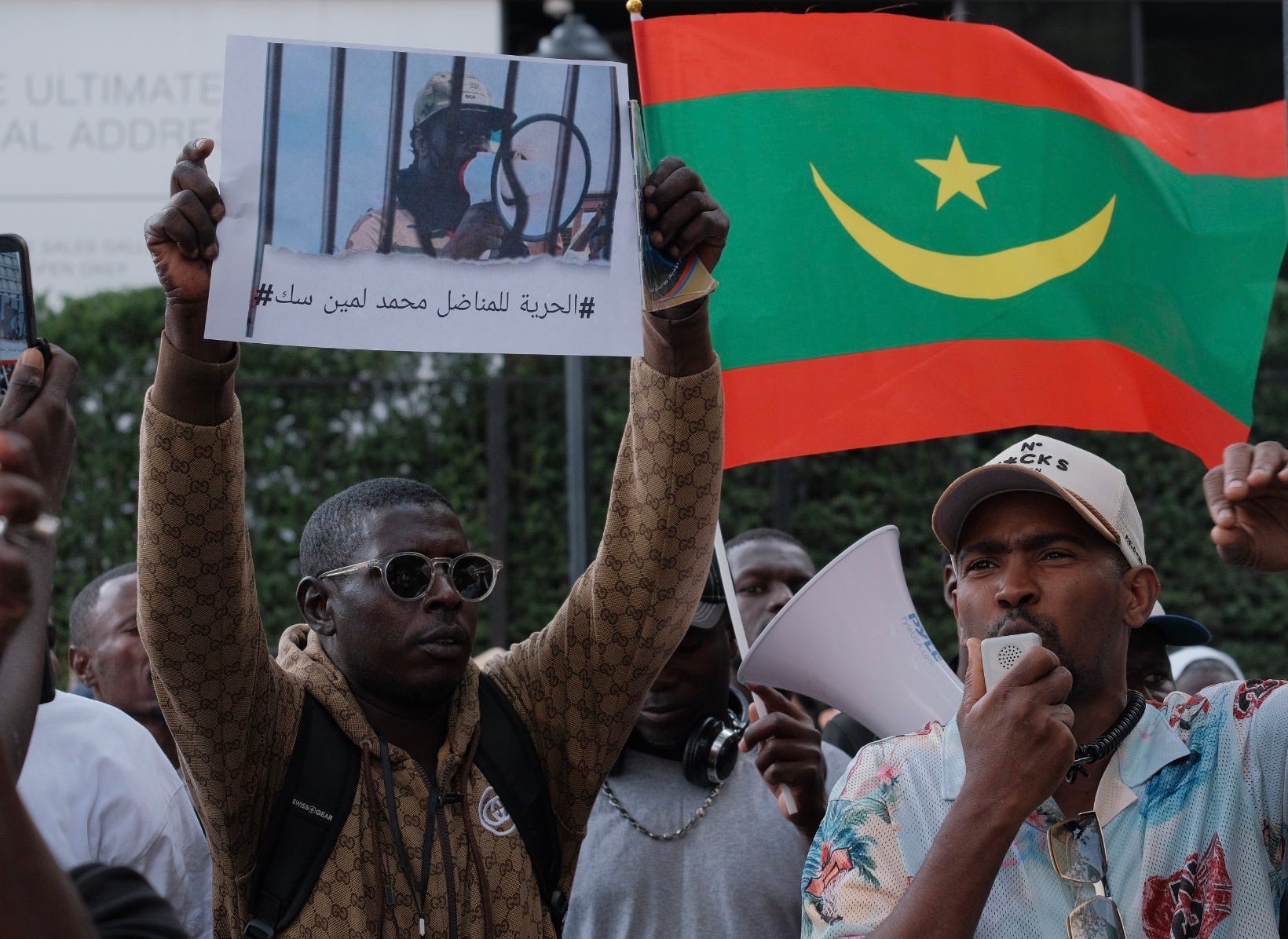
The structural reality begins with incentive, not intent. Mauritania’s Beydane and Arab-Moorish elite class have organized their social and economic position around hereditary labor extraction for generations. Reform is not, in this context, a policy choice that carries costs and benefits. It registers as an existential threat to a social identity that is inseparable from caste hierarchy. When the state acts to preserve this order, it is not corruption in the conventional sense. It is the elite defending the conditions of its own reproduction.
The mechanisms are visible, once you know what you are looking at. Police and prosecutors do not simply ignore slavery complaints. They redirect them, into “social mediation” processes that reframe a criminal matter as a civil dispute between families [1, 5, 6]. Anti-slavery judges who press cases find themselves reassigned. Civil society organizations that document abuses face prosecution under cybercrime and blasphemy laws. Border officials collude with smugglers. The pattern is too consistent, too multi-actor, and too precisely calibrated to represent bureaucratic failure. It is institutional design operating as intended.
The primary driver is not bureaucratic weakness in the abstract. It is elite self-preservation. The diversion of complaints, the prosecution of activists, the reassignment of judges, and the management of international perception are best understood as supporting mechanisms.
Each helps preserve a caste order that the state still treats as socially and politically useful.
Each piece reinforces the others. Every mediation settlement normalizes the premise that slavery is a personal matter between parties, not a crime against the state. Every activist prosecution raises the cost of reporting for the next victim. Every judicial reassignment signals to the judiciary what outcomes are acceptable. The system does not require a central coordinator. The incentive structure is the coordinator.
External actors compound the problem, not by malice but by structural misalignment. Mauritania occupies a valuable position in the regional security architecture. It is the one Sahelian country that has avoided a successful jihadist attack since 2011 [2, 4]. For the United States, this makes it a counterterrorism partner worth preserving. For the European Union, Mauritania’s Atlantic coast makes it indispensable to migration containment. In January 2026, the United States delivered military equipment to Mauritanian border forces without documented human-rights conditionality [3]. The European Union has funded migration control operations that Human Rights Watch linked, through 2025, to arbitrary arrest, torture, and collective expulsion [7].
This is not callousness. It is the predictable output of a partnership logic that prices stability above accountability. And it functions as a legitimacy subsidy to the Ghazouani regime. As long as security cooperation continues regardless of enforcement performance, reform carries no external cost for non-compliance and no material reward for progress. The TIP Tier 2 rating operates similarly. It was elevated on the basis of legal and institutional framework outputs, laws passed, bodies created, plans adopted, rather than outcome metrics. It now functions as a reputational shield that reduces downgrade pressure precisely when enforcement failure is most acute [5, 6].
The result is what the QAP assessment terms “legitimacy laundering”: producing international recognition at zero enforcement cost.
Here, legitimacy laundering means converting legal and procedural outputs into international credibility without corresponding enforcement outcomes. The point is not to end abuse. It is to generate enough institutional performance to satisfy external observers while preserving the structure that makes enforcement politically costly.
Each new law, each new body, each new action plan generates a signal that reform is ongoing, without altering the ground-level reality by a single conviction.
Current responses struggle because they are calibrated to the wrong problem. Capacity-building programs train officials in a system designed to divert cases before they reach those officials. National Action Plans are adopted in governance environments where adoption is the point, not implementation. Diplomatic engagement that stops short of conditionality produces meetings, not accountability. The institutions being improved are the ones performing the obstruction.
The highest-leverage intervention in the current architecture is the INCHTMS, the National Committee for Combating Human Trafficking and Smuggling. It has legal mandate, infrastructure, and enough international visibility to serve as a reform anchor. The structural logic is clear: if granted binding authority over prosecutorial referrals, and if its membership is expanded to include formally recognized civil society organizations from affected communities, it becomes the only body with both the mandate and the independence to force cases into the judicial system rather than out of it [1, 5, 6]. The committee matters not because it is inherently stronger than the courts or prosecutor’s office, but because it sits at the junction between international visibility and domestic case movement. Courts can only act on cases that reach them. Police can only investigate cases they are permitted to formalize. A body with formal referral power and protected civil-society representation would be harder for the current system to absorb than another training program or another action plan. This would not fix the system overnight. But it would introduce the first meaningful friction into a machine that currently runs without resistance.
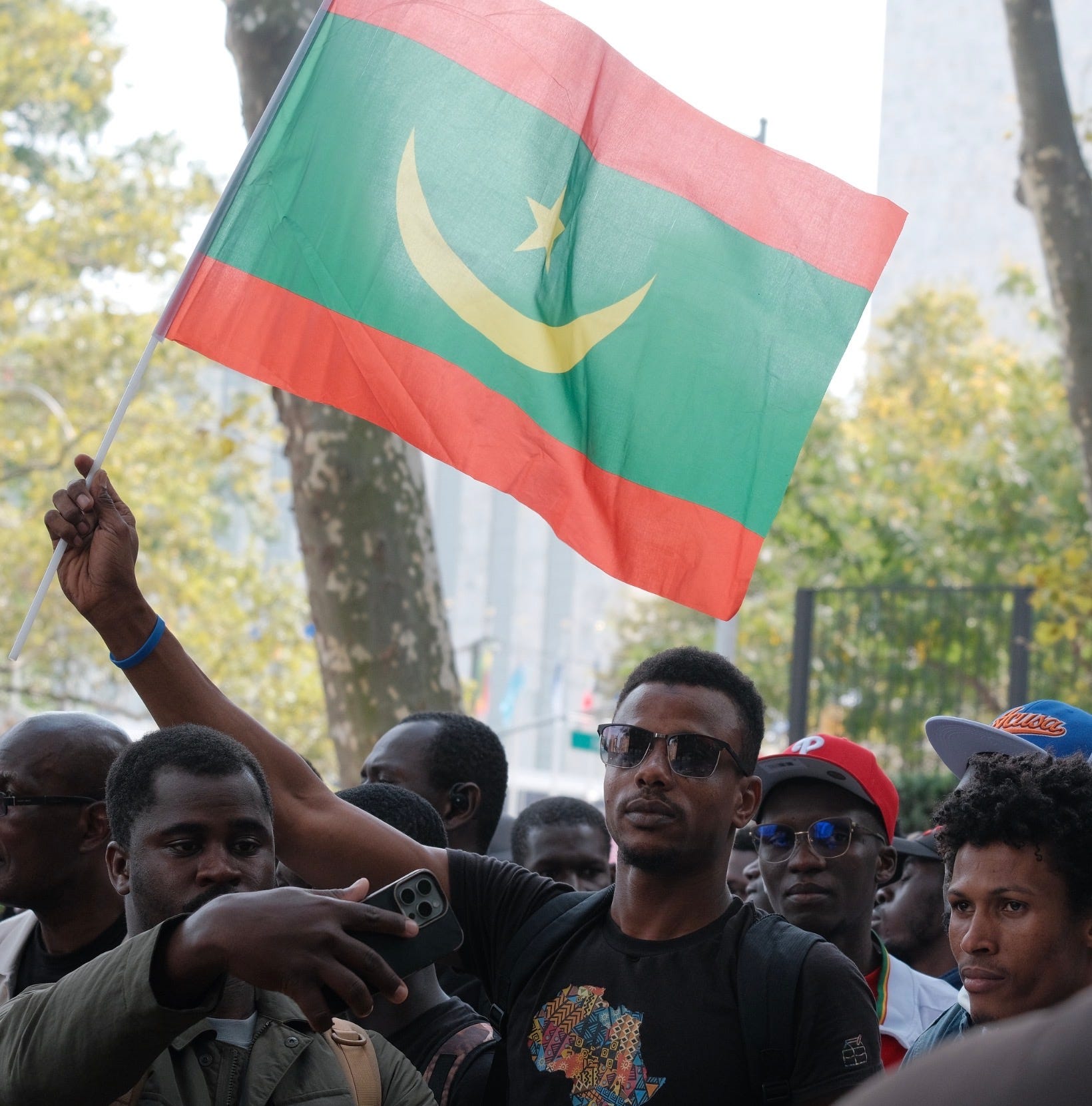
The broader context matters here. Mauritania hosts more than 309,000 refugees, with nearly 8,000 new arrivals from Mali recorded between October 2025 and January 2026 [2]. JNIM, the Sahel’s dominant jihadist network, maintains active bases in the Wagadou Forest along the Mauritania-Mali border [2, 4]. These facts are not tangential to the slavery question. They are structurally connected to it.
Haratine communities in Hodh Chargui, the eastern border region absorbing the refugee influx, are simultaneously the most marginalized population in Mauritania and the most geographically exposed to JNIM’s recruitment environment. For populations for whom the state has historically offered only extraction, an ideological movement that offers equality and belonging within a religious framework is not simply a security threat. It is a structurally coherent alternative. The state has not earned the loyalty it assumes from these communities. It has extracted it through the same architecture of intimidation that sustains the slavery system.
This is the trajectory if underlying conditions remain unchanged. Not dramatic collapse, but deepening fragility at the periphery. Managed stasis at the center. Gradual erosion of the legitimacy that currently keeps the scenario from cascading [1, 4].
The reason this matters, beyond the obvious moral weight of 149,000 people in conditions of slavery, is that the international community is actively financing a system it claims to oppose. Security partnerships and migration agreements are not neutral. They carry structural consequences. When assistance flows without conditionality, it subsidizes the incentive structure that makes reform costly and non-reform free. The policy logic that produces this outcome is not indefensible on its own terms: regional security has genuine value. But it requires honest accounting of what is being traded away and for how long.
The 2026 TIP reporting cycle is the near-term leverage point. A credible signal that continued enforcement failure will trigger Watch List placement in 2027 is the single most actionable tool available to external actors. Not because shame alone moves governments, but because Tier 2 Watch List status would create the first material consequence the current architecture does not have a pre-built mechanism to absorb.
Mauritania’s governance-exclusion loop is not a paradox. It is a system in equilibrium. The question is whether any actor with sufficient leverage is willing to disturb it.
Read the full Quanta Analytica assessment: https://quanta-analytica.com/reports/mauritania-governance-exclusion-loop.html
Nuri Shakoor, SRMP-R
References
[1] Shakoor, M.N. (2025). The Mauritanian Paradox: A Systems Analysis of Institutional Sabotage, State Fragility, and Pathways to Legitimacy. ARAC International Inc. CC BY-NC-ND 4.0.
[2] UNHCR (January 2026). Mauritania Hodh Chargui 2025 Overview. reliefweb.int
[3] ADF Magazine (January 2026). “Mauritania Receives U.S. Military Equipment.” adf-magazine.com
[4] Africa Center for Strategic Studies (2024). “Mauritania: 2024 Elections Spotlight.” africacenter.org
[5] U.S. Department of State (2024). 2024 Trafficking in Persons Report: Mauritania. state.gov
[6] U.S. Department of State (2025). 2025 Trafficking in Persons Report: Mauritania. state.gov
[7] Human Rights Watch (2025). They Accused Me of Trying to Go to Europe: Migration Control Abuses and EU. hrw.org
[8] Corp Accountability Lab (2025). “Widespread Chattel Slavery in Mauritania.” corpaccountabilitylab.org