


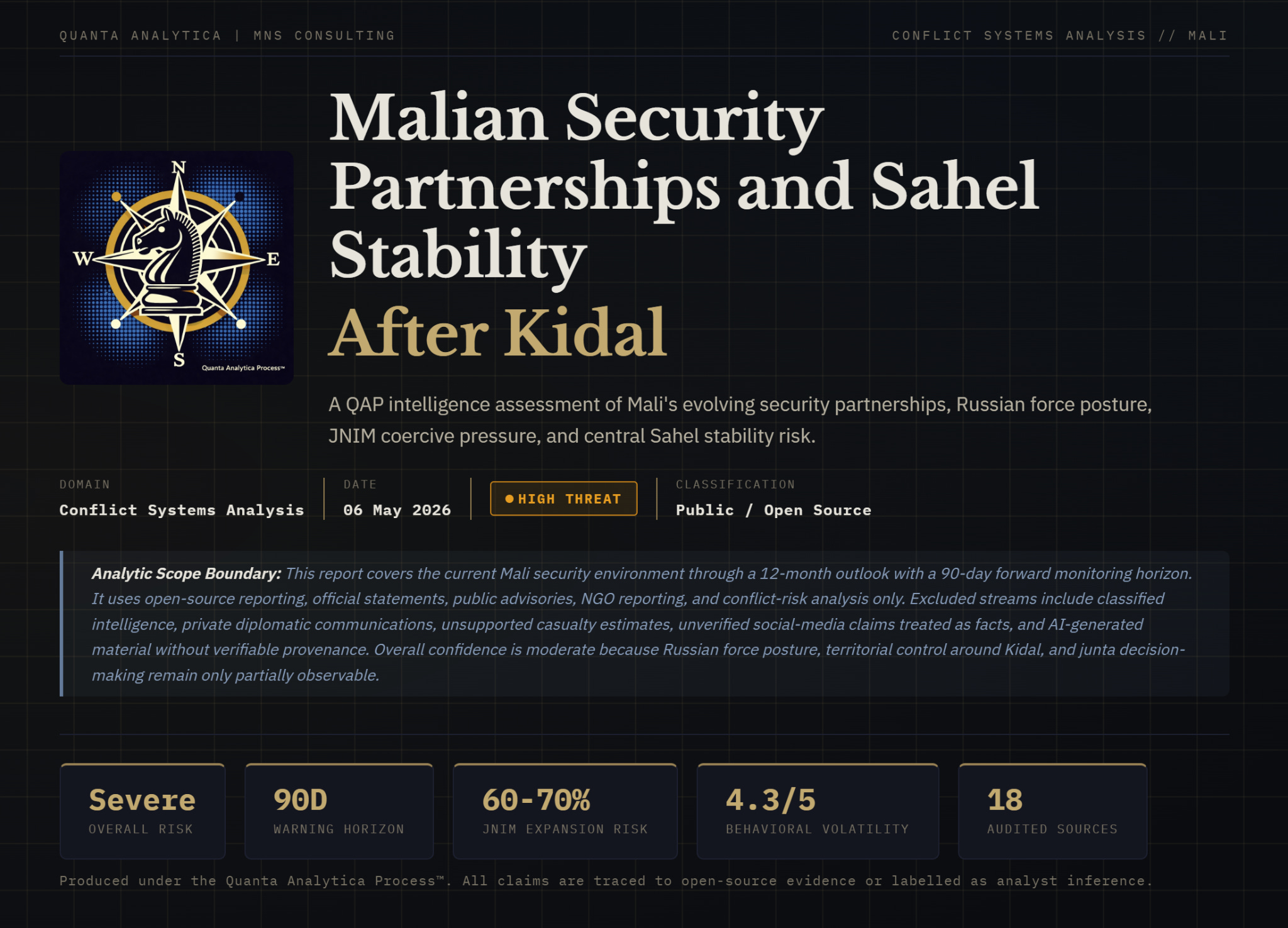
In this assessment, we examine how Mali’s shifting security partnerships are affecting national and regional stability over the next 12 months. Specifically, we assess whether the reported withdrawal or repositioning of Russian paramilitary forces and the fall of Kidal signal a failure of Mali’s current transactional security model, or a tactical realignment after the perceived failures of earlier partnerships with France, MINUSMA, and ECOWAS. The goal is to support regional risk planning by identifying warning thresholds for systemic security deterioration, further territorial loss, and expanded instability across the Sahel.
What verified changes in territorial control, actor presence, operational access, and security-force posture have occurred in northern Mali since the fall of Kidal?
What evidence supports or refutes the narrative of Russian betrayal versus tactical retreat or repositioning?
How have the perceived failures of MINUSMA, France, and ECOWAS shaped junta reliance on non-traditional security partners and sovereignty narratives?
How likely is expanded JNIM influence across the Mali-Burkina Faso-Niger border regions over the next 90 days?
What observable indicators would suggest Mali is attempting to reopen ties with previously curtailed international or regional partners?