


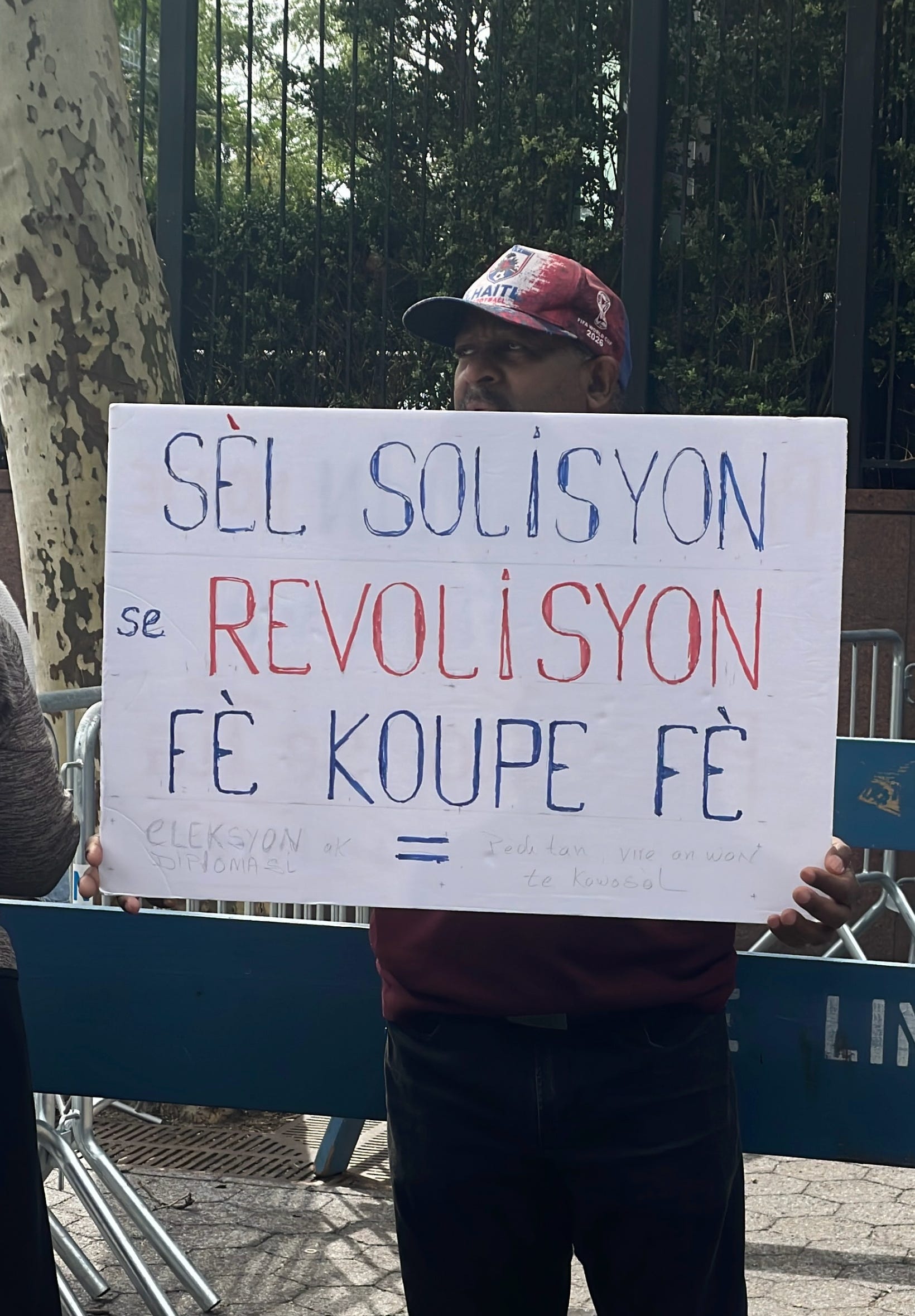
By M. Nuri Shakoor, SRMP-R, SRMP-C
ARAC International | Quanta Analytica
November 5, 2026 - Flashpoints & Frameworks
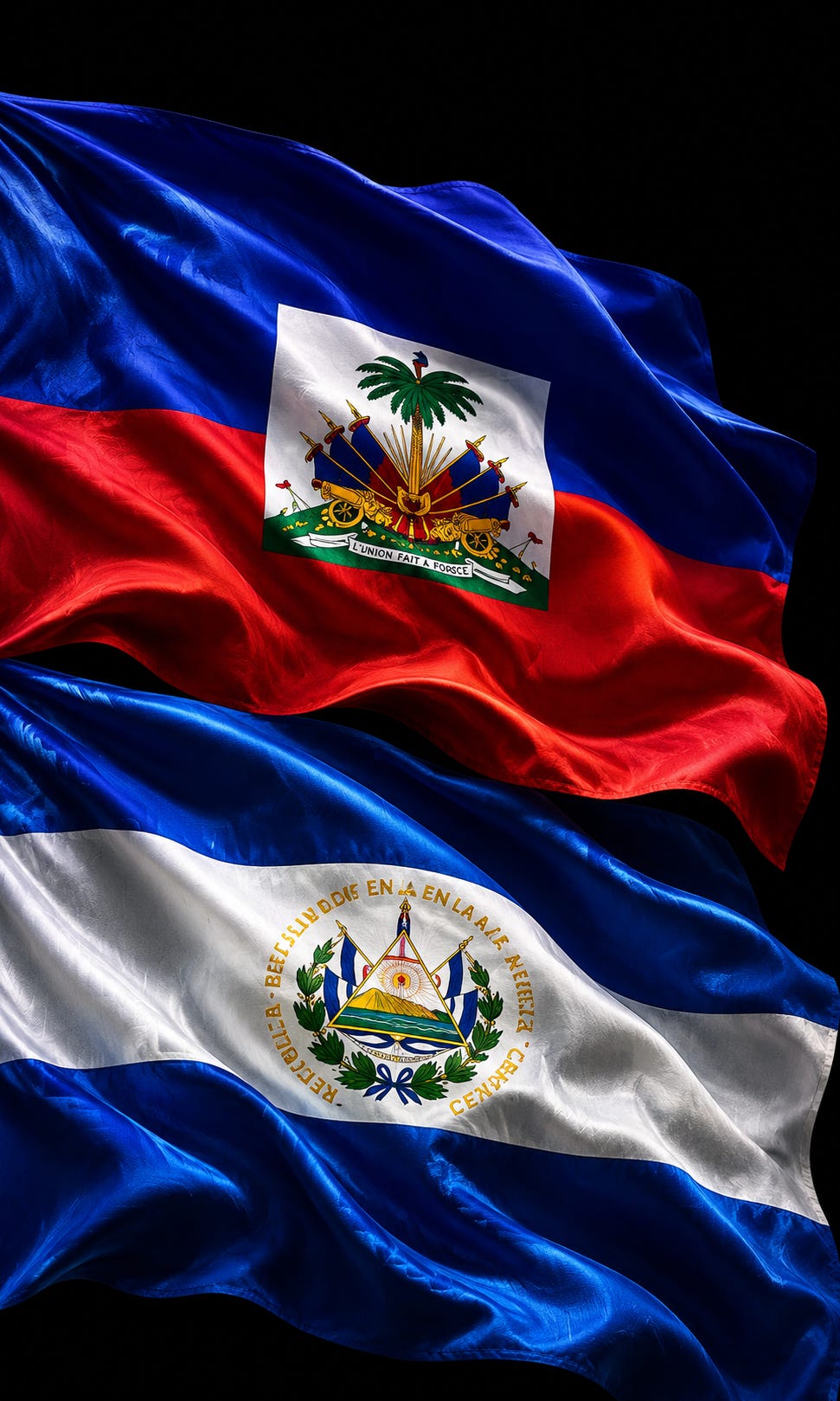
Who: El Salvador’s military, Haitian authorities, and Haiti’s powerful armed gangs.
What: A major Salvadoran military intervention targeting Haiti’s gang-related security crisis.
Where: Haiti, particularly gang-controlled areas surrounding Port-au-Prince.
When: October 2026, following the disappearance of four Salvadoran aviation technicians.
How: Through the deployment of approximately 2,000 Salvadoran troops, expanding an initial personnel-recovery mission.
Why: To recover missing personnel and confront gang violence, raising broader questions about sovereignty, civilian protection, and sustainable stabilization.
A recurring assumption in international security policy that I find increasingly difficult to accept: that when a government loses control of its territory to armed groups, the solution begins with introducing enough military force to reclaim it.
The assumption is understandable. When criminal organizations control neighborhoods, extort businesses, terrorize families, and challenge the authority of the state, the immediate instinct is to restore order through overwhelming force.
But restoring order and restoring a functioning state are two different undertakings.
Haiti has spent years demonstrating the consequences of confusing the two.
Now, with El Salvador deploying approximately 2,000 military personnel to Haiti following the disappearance of four Salvadoran aviation technicians in October, the country has entered another consequential chapter in its struggle against armed gangs.
What began as a personnel-recovery operation has developed into a much larger military deployment, raising questions about its operational mandate, political objectives, and potential long-term consequences.
And I think the most important question is not whether Salvadoran forces possess the capability to confront Haiti’s armed gangs.
It is whether military intervention can produce a lasting political and institutional outcome in a country where the institutions necessary to sustain security have been severely weakened.
That distinction deserves considerably more attention than it has received.
The Appeal of the Salvadoran Model
El Salvador’s President Nayib Bukele has become internationally associated with an aggressive approach to gang suppression.
Supporters point to the country’s dramatic improvements in reported security conditions and argue that his government’s willingness to confront organized criminal networks offers lessons for other states struggling with gang violence.
Critics raise equally consequential concerns about prolonged emergency powers, mass incarceration, due process, and the institutional consequences of concentrating extraordinary security authority within the executive branch.
Both perspectives matter because Haiti is not El Salvador.
The two countries differ substantially in their political institutions, security organizations, criminal economies, and relationships between government authority and civilian populations.
A security strategy developed within one country’s domestic institutional framework does not automatically become an effective stabilization strategy when transported into another.
This is where I believe the debate requires greater analytical discipline.
We should distinguish between a government’s ability to suppress criminal activity and its ability to establish conditions under which that suppression becomes sustainable.
The first is primarily an operational challenge.
The second is fundamentally a governance challenge.
A military force may clear a neighborhood of armed groups. But who administers justice afterward? Who protects residents against retaliation? Who prevents criminal organizations from rebuilding their financial networks? Who ensures that children recruited into gangs have alternatives to returning to violence?
And perhaps most importantly, who exercises legitimate authority when the foreign troops eventually leave?
These questions are not secondary considerations.
They determine whether an intervention produces stabilization or merely another temporary interruption in a prolonged crisis.
Haiti’s Crisis Is Larger Than Its Gangs
One of the difficulties in understanding Haiti is that armed gangs have become the most visible expression of a much broader institutional crisis.
They control territory, exploit illicit economic networks, intimidate communities, and challenge public authority.
Yet their influence is sustained by conditions that military operations alone are poorly equipped to resolve.
Weak institutions create opportunities for criminal governance. Criminal governance undermines legitimate economic activity. Economic disruption reduces the resources available to public institutions. Diminished public services and security, in turn, create further opportunities for armed groups.
It is a destructive cycle in which insecurity becomes both a consequence and a driver of institutional weakness.
The humanitarian conditions make this particularly troubling.
According to the October 2026 Integrated Food Security Phase Classification assessment cited in our research, approximately 5.94 million Haitians, representing 53 percent of the analyzed population, face Crisis-level acute food insecurity or worse during the September 2026 to February 2027 period.
That is not simply a humanitarian statistic.
It is an indicator of the extraordinary pressure under which Haitian society is operating.
When people struggle to obtain food, access essential services, travel safely, or earn a legitimate living, criminal organizations gain additional opportunities to exploit desperation.
A successful security strategy must therefore do more than defeat armed opponents.
It must help create conditions in which those opponents lose their ability to exercise coercive control over communities.
The Problem With Measuring Military Success
I have long believed that one of the weaknesses of contemporary security analysis is our tendency to confuse activity with achievement.
We count deployed personnel, arrests, seized weapons, disrupted operations, and territory cleared.
These measurements have value.
But they tell us relatively little about whether the underlying security environment is improving in ways that civilians can actually experience.
Consider a neighborhood temporarily cleared of armed gangs.
Military commanders may describe the operation as successful. The immediate threat may indeed have been reduced.
But suppose residents remain afraid to travel, businesses cannot reopen, extortion continues through informal networks, and local police lack the resources to maintain a presence.
Has the neighborhood genuinely been stabilized?
Or has the visible expression of insecurity simply changed?
This distinction is particularly important in Haiti, where armed groups have demonstrated an ability to adapt, relocate, and sustain themselves through criminal financing.
Military pressure may disrupt their territorial operations without eliminating the economic and organizational structures that support them.
That is why the central measure of success should not be how much force is introduced into Haiti.
It should be how much legitimate security, public authority, and civilian freedom that force ultimately helps restore.
The Sovereignty Question
There is another dimension to this intervention that deserves careful consideration.
Haiti requires international assistance, but international assistance and national sovereignty are not opposing principles.
They become difficult to reconcile when responsibility, authority, and accountability are insufficiently defined.
Who determines the operational priorities of foreign military forces?
Under whose legal authority are individuals detained?
What mechanisms exist to investigate civilian harm?
And what conditions determine whether an international military presence expands, contracts, or ends?
These are not merely technical questions for military planners and international lawyers.
They concern the relationship between foreign intervention and the legitimacy of Haitian institutions.
A government that depends indefinitely on external forces to exercise authority risks becoming politically responsible for security arrangements it does not fully control.
At the same time, foreign governments undertaking security operations may find themselves assuming responsibilities that extend far beyond their original objectives.
This is one reason the uncertainty surrounding the scope and command arrangements of El Salvador’s deployment deserves sustained scrutiny.
A mission that begins with a narrowly defined objective can gradually acquire additional responsibilities.
Without clearly established limits, what begins as a temporary security response can become a prolonged political and military commitment.
History offers enough examples of this problem to warrant caution.
What Our Special Report Examines
At ARAC International and Quanta Analytica, we have completed a Special Strategic Intelligence Assessment examining El Salvador’s military intervention in Haiti, including its immediate security implications and the broader risks associated with an expanded foreign military presence.
Rather than approaching the intervention through the familiar argument that military force is either the solution or the problem, we examine the conditions under which different outcomes could emerge.
Our assessment considers four competing explanations for the Salvadoran deployment, including personnel recovery, expanded gang suppression, regional strategic positioning, and the possibility that the mission evolved in response to events rather than through a predetermined strategy.
We also examine four plausible operational trajectories over the coming months:
A limited recovery operation, in which Salvadoran forces concentrate on resolving the original personnel crisis before reducing their presence.
A sustained gang-suppression campaign, in which the mission expands into a longer security commitment supported by clearer coordination arrangements.
An escalation scenario, in which intensified military operations produce additional armed resistance, civilian harm, or humanitarian disruption.
A fragmented stabilization outcome, in which temporary territorial gains fail to translate into durable improvements in public security and governance.
These are not predictions presented as certainties.
They are structured scenarios designed to help analysts, policymakers, humanitarian organizations, and interested observers identify developments that could alter the strategic trajectory.
The assessment also includes an indicators and warning register, a strategic risk assessment, an examination of civilian protection concerns, and recommendations for evaluating whether security improvements are becoming sustainable.
Our objective is to move beyond the immediate headlines and examine what the available evidence tells us, what remains uncertain, and which developments deserve closer monitoring.
Why This Matters Beyond Haiti
The implications of this intervention extend beyond the Caribbean.
Across parts of Africa, Latin America, and other regions experiencing prolonged insecurity, governments and international partners confront similar questions.
When armed organizations exploit weak institutions, should external assistance prioritize the immediate suppression of violence or the slower process of rebuilding legitimate governance?
In practice, the answer requires both.
But the sequence, coordination, and institutional safeguards matter enormously.
Security operations that are disconnected from political legitimacy and institutional recovery risk reproducing the conditions that made intervention necessary.
This is why I approach Haiti’s situation not simply as a question of military capability, but as a test of how governments understand the relationship between coercive power and legitimate authority.
A state is not restored merely because armed opponents have been pushed from its streets.
It is restored when its institutions can protect people, administer justice, provide essential services, and exercise authority without depending indefinitely on extraordinary external intervention.
That is the distinction our analysis seeks to illuminate.
An Invitation to Go Beyond the Headlines
Our newsletter is intended to make complex security and geopolitical developments understandable to a broader audience.
But understanding what happened is only the beginning of strategic analysis.
The more demanding task is examining why events are unfolding, what competing explanations remain plausible, which risks are emerging, and what evidence might indicate that the situation is changing.
That is the purpose of our expanded intelligence research at Quanta Analytica.
For readers who want to engage with the deeper analysis behind our public commentary, I invite you to join us on Patreon through Quanta Analytica Insights.
Our special intelligence briefing, El Salvador’s Military Intervention in Haiti: Gang Suppression, State Sovereignty, and the Risk of Strategic Escalation, provides a structured assessment of the intervention, including competing hypotheses, strategic actor interests, forward scenarios, indicators and warning, institutional vulnerabilities, and operational risks.
It is designed for readers who want more than a summary of events.
It is for those who want to understand the analytical reasoning behind our judgments and the evidence that may challenge them.
Access the Full Special Intelligence Assessment
Join Quanta AnalyticaTM Insights on Patreon:
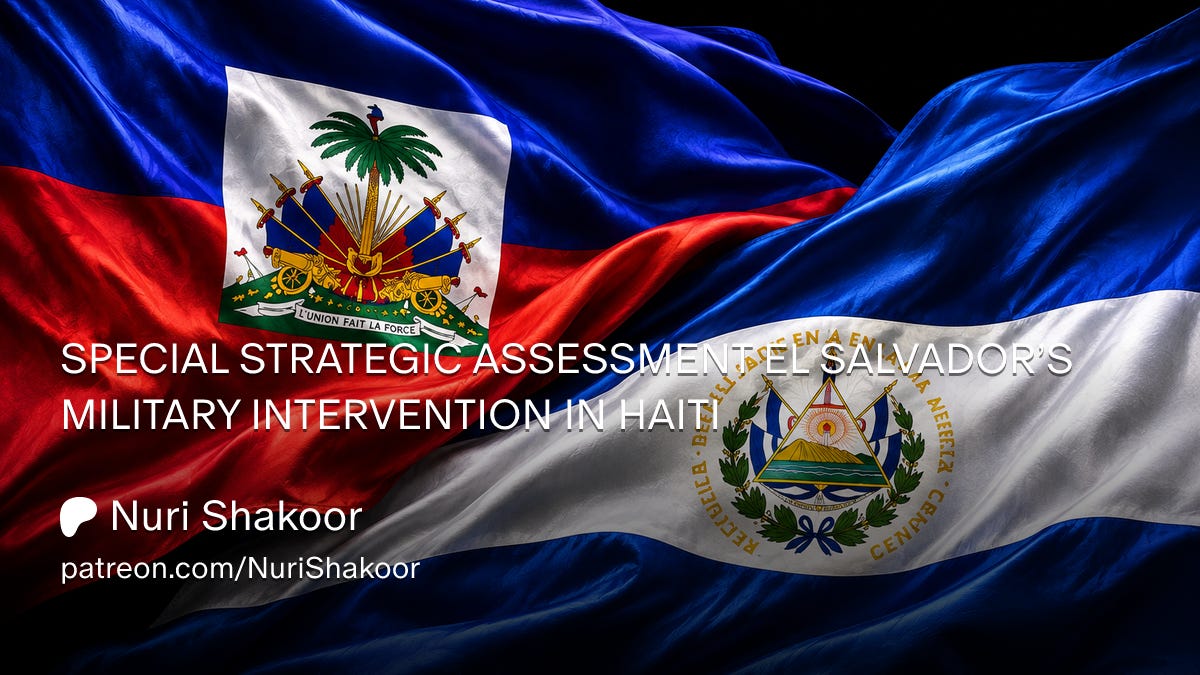
Your support helps sustain independent, evidence-based research into international security, governance, conflict dynamics, and emerging strategic risks.
More importantly, it allows us to continue developing research that places analytical integrity ahead of speculation and long-term understanding ahead of short-term headlines.
Because the question confronting Haiti is not simply whether foreign military forces can defeat its gangs.
It is whether the conditions that allowed those gangs to become powerful can finally be changed.
And that is a much more difficult question than military strength alone can answer.
Nuri Shakoor is a global security analyst and researcher specializing in conflict dynamics, institutional fragility, security risk management, and strategic intelligence. His work with ARAC International, Lladner Systems, and Quanta AnalyticaTM examines the relationship between security, governance, human behavior, and conflict prevention.
Research publication: ARAC International / Quanta Analytica™, Special Strategic Intelligence Assessment: El Salvador’s Military Intervention in Haiti (November 5, 2026).
The Quanta Analytica Process™